
ADHD Therapy
for People Who Feel Stuck
Online ADHD therapy for teens, college students, and adults navigating procrastination, executive functioning challenges, work stress, burnout, anxiety, and shame.
ADHD CAN AFFECT
MORE THAN ATTENTION
ADHD does not always look like hyperactivity. Many people come to therapy wondering why they are capable in some areas but feel stuck in others. ADHD can affect executive functioning — the brain’s ability to plan, prioritize, start, shift, organize, remember, regulate emotions, and follow through.
You may notice:
Difficulty starting tasks, even when they are important
Procrastination until the pressure becomes urgent
Trouble estimating how long something will take
Feeling overwhelmed by multi-step tasks
Losing track of details, deadlines, or routines
Emotional sensitivity, frustration, or rejection sensitivity
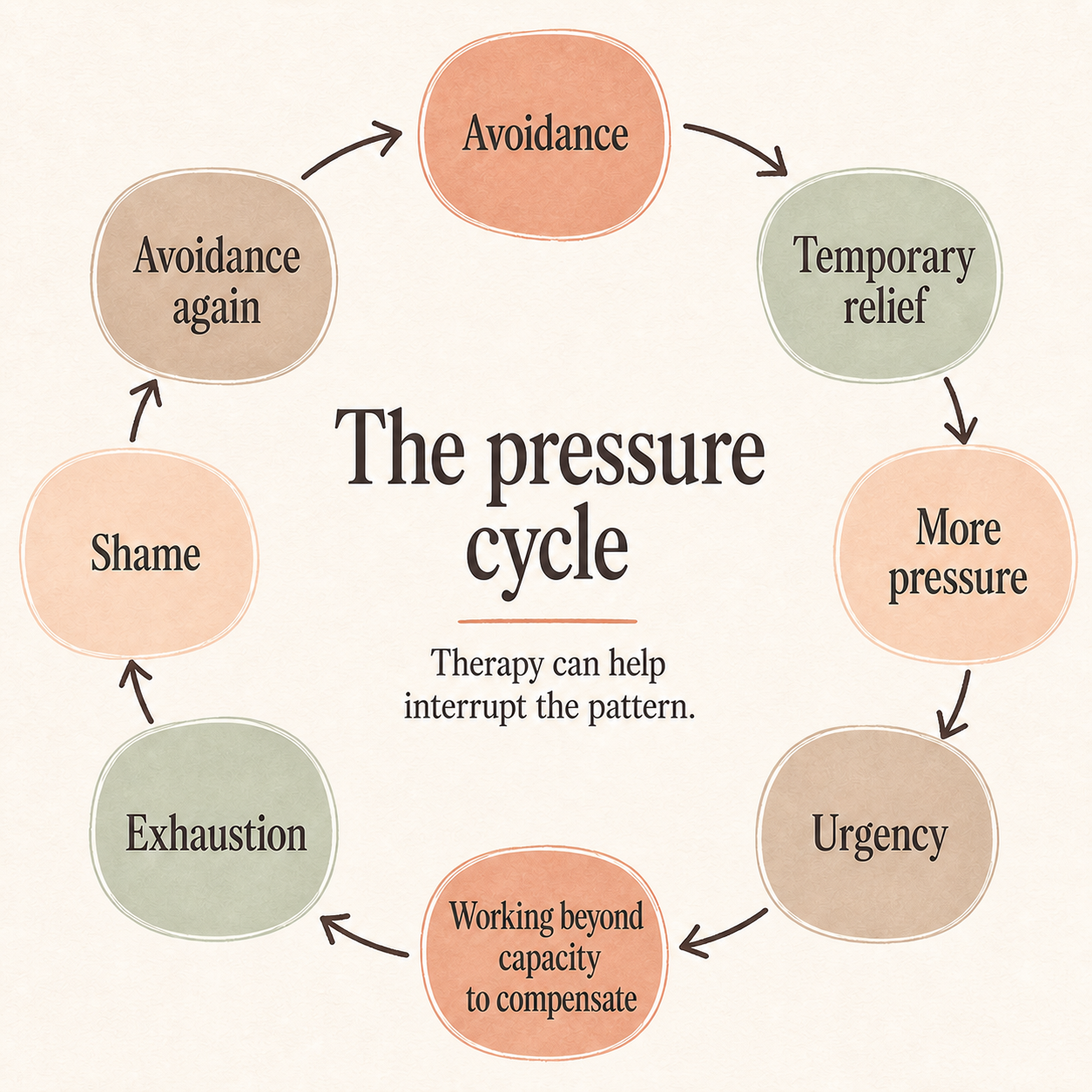
Cycles of avoidance, guilt, and last-minute overworking
Feeling “lazy,” “unmotivated,” or “not disciplined enough,” even when you are trying hard
Which ADHD Experience Sounds Most Familiar?

For Parents Wondering About Their Child’s Attention and Emotions
You may notice your child has difficulty starting homework, following multi-step directions, shifting from one activity to another, managing frustration, or calming down after disappointment. Sometimes these challenges are misunderstood as defiance, carelessness, or “not trying hard enough.”
Therapy can help children and families better understand attention, emotion regulation, motivation, and the environment around the child. Parent support can also help reduce conflict, strengthen communication, and create routines that are more realistic and supportive.

For Teens and College Students
ADHD can become more noticeable when school demands increase. You may be juggling classes, deadlines, extracurriculars, social life, family expectations, college applications, or future planning — while feeling increasingly overwhelmed or avoidant.
Therapy can help teens and college students understand their attention patterns, reduce shame, build planning and transition skills, manage emotional ups and downs, and communicate more effectively with parents, teachers, or support systems.

For Adults with ADHD and Executive Function Challenges
Adult ADHD can feel like being a chronic deadline fighter. You may procrastinate until urgency kicks in, struggle with routine tasks, feel scattered across responsibilities, or become exhausted from trying to “keep up.” Many adults with ADHD are thoughtful, capable, and successful — but privately carry years of self-criticism.
Therapy can help you understand the ADHD-procrastination-shame cycle, build strategies for task initiation and follow-through, and develop a kinder, more effective relationship with your brain.
ADHD often does not show up alone. Many clients also experience anxiety, perfectionism, burnout, depression, eating concerns, or relationship stress.
Sometimes anxiety becomes the “engine” that pushes tasks forward. Sometimes perfectionism makes it hard to start because the task feels too big, too uncertain, or too easy to do “wrong.”
When ADHD Overlaps with Anxiety, Burnout, or Perfectionism
Over time, this can create a painful cycle →

ADHD Can Be Especially Hidden in High-Achieving People
Many high-achieving people with ADHD have learned to compensate for years. You may have relied on intelligence, urgency, fear of disappointing others, late-night work, or intense effort to get things done. From the outside, others may see you as capable and responsible. Inside, you may feel exhausted, inconsistent, or afraid you are barely holding things together.

For immigrants, Asian American clients, and students or professionals from high-expectation family systems, ADHD can be especially hard to recognize. Difficulties with attention, motivation, or emotional regulation may be misread as laziness, lack of discipline, or not caring enough.

In therapy, we can explore ADHD with cultural sensitivity — understanding not only symptoms, but also family expectations, identity, shame, achievement pressure, and the ways you have tried to survive and succeed.What We May Work on in ADHD Therapy

Planning, prioritizing, and breaking tasks into manageable steps

Navigating school, college, work, or major life transitions

Improving communication with parents, partners, teachers, or coworkers
Learn More →

Emotion regulation and rejection sensitivity

ADHD therapy is not about forcing yourself to become a different person. It is about understanding how your brain works and creating systems, skills, and self-understanding that make life more manageable.
Depending on your needs, therapy may focus on:
Task Initiation and reducing avoidance

Managing procrastination and deadline pressure

Building routines that actually fit your life

Common questions about ADHD Therapy
-
Yes. Many adults begin exploring ADHD after years of feeling overwhelmed, inconsistent, or self-critical. Therapy can help you understand long-standing patterns with more compassion and develop strategies that fit your current life.
-
Yes. ADHD can be hidden in people who are bright, responsible, and outwardly successful. You may be able to perform well under pressure, but privately feel exhausted, scattered, behind, or dependent on last-minute urgency to get things done. Therapy can help you understand the ADHD-anxiety-perfectionism cycle and build more sustainable ways to function.
-
Yes. I support teens and college students navigating school stress, deadlines, emotional regulation, family expectations, transitions, and executive functioning challenges.
-
Yes. I work with parents who have ADHD and parents who are supporting children or teens with ADHD. Parent support can help children feel more seen and less criticized, while helping families better understand attention, motivation, emotion regulation, and behavior. We may work on reducing conflict, creating more realistic routines, improving communication, and building supportive patterns at home.
-
Yes. ADHD can affect communication, follow-through, household responsibilities, emotional regulation, and patterns of misunderstanding in relationships. I help partners better understand ADHD, increase empathy, reduce blame, and develop communication patterns that minimize conflict. We may also explore how both partners can work together to create more realistic expectations, routines, and repair strategies.
-
Yes. Procrastination is often not simply a “motivation problem.” It may be connected to task initiation, emotional overwhelm, perfectionism, anxiety, boredom, uncertainty, or shame. In therapy, we can explore your procrastination cycle and build strategies for starting tasks, breaking things down, reducing avoidance, and relying less on last-minute pressure.
-
No. Some clients come with an existing ADHD diagnosis, while others are just beginning to wonder whether ADHD, anxiety, burnout, depression, perfectionism, or life stress may be affecting their attention and motivation. Therapy can help clarify patterns, build practical strategies, and identify whether additional formal evaluation, medication consultation, school supports, or coordination with other providers may be helpful.
-
Yes. Therapy is available in English, Mandarin, and Cantonese. For many clients and families, being able to talk about attention, emotions, family expectations, shame, and cultural experiences in a preferred language can make therapy feel more natural and meaningful.

Ready to Better Understand Your ADHD Patterns?
You do not have to keep relying on pressure, shame, or last-minute urgency to get through the day. Therapy can help you understand what is getting in the way and build strategies that feel more realistic, compassionate, and sustainable.